Writing
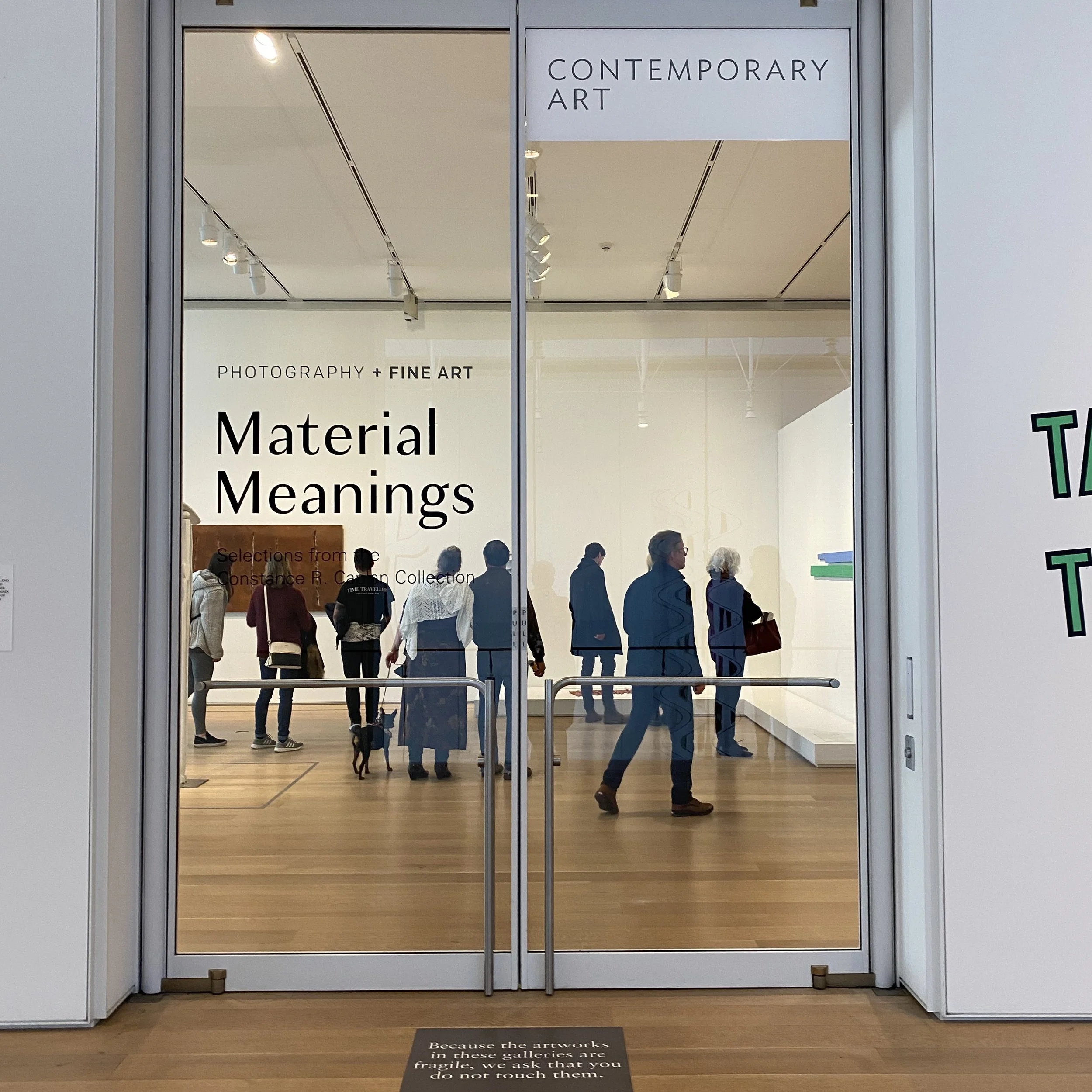
On Returning from Tonnicoda
Essay on a work by Cy Twombly, Material Meanings exhibition catalog, Art Institute of Chicago, 2020
Available at the Art Institute of Chicago Museum Shop
I am surrounded by green—maple trees, evergreen trees, long grassy lawns—as I look out the windows across the north face of my studio here in Virginia. Lush green of every shade and texture. This is the green Cy Twombly (American, 1928-2011) would have been surrounded by as he grew up in Lexington, Virginia, just an hour’s drive from here. Verdant, tangled vines looping through the forest, his town tucked between the Blue Ridge Mountains. Maybe when green is that pervasive in your life, it stays with you. Maybe you seek it out elsewhere. Black Mountain College, The Mediterranean Sea, Gaeta, Italy. Maybe it works its way into your art as well….
Read More
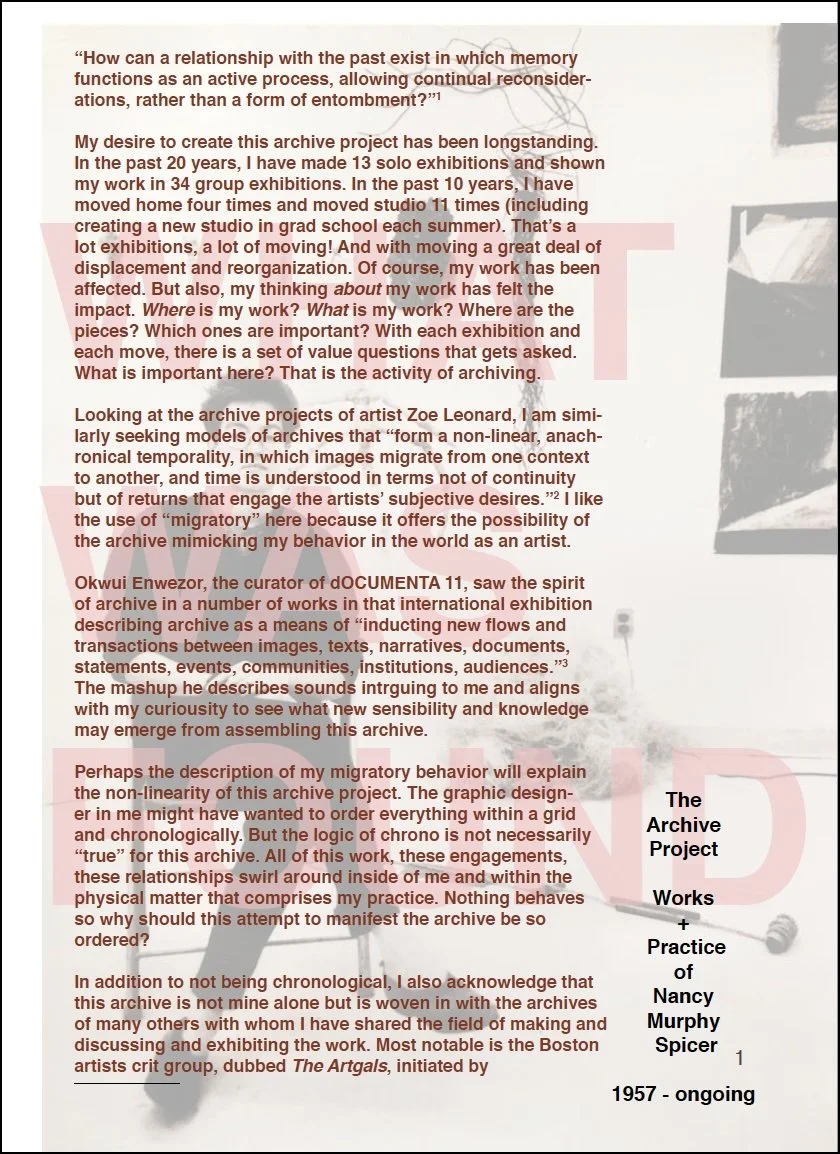
What Was Found: The Archive Project
Handbound artists book surveying 20 years of my art practice, 2018
Joan Flasch Artists Book Collection, School of the Art Institute of Chicago
“How can a relationship with the past exist in which memory functions as an active process, allowing continual reconsiderations, rather than a form of entombment?”
- Renee Green, “Survival, Ruminations on Archival Lacunae,” The Archive, Whitechapel Documents in Contemporary Art
My desire to create this archive project has been longstanding. In the past 20 years, I have made 13 solo exhibitions and shown my work in 34 group exhibitions. In the past 10 years, I have moved home four times and moved studio 11 times…That’s a lot of exhibitions, a lot of moving! And with the moving a great deal of displacement and reorganization. Of course, my work has been affected. Where is my work? What is my work? Where are the pieces? Which ones are important? With each exhibition and each move, there is a set of value questions that gets asked. What is important here? That is the activity of archiving…
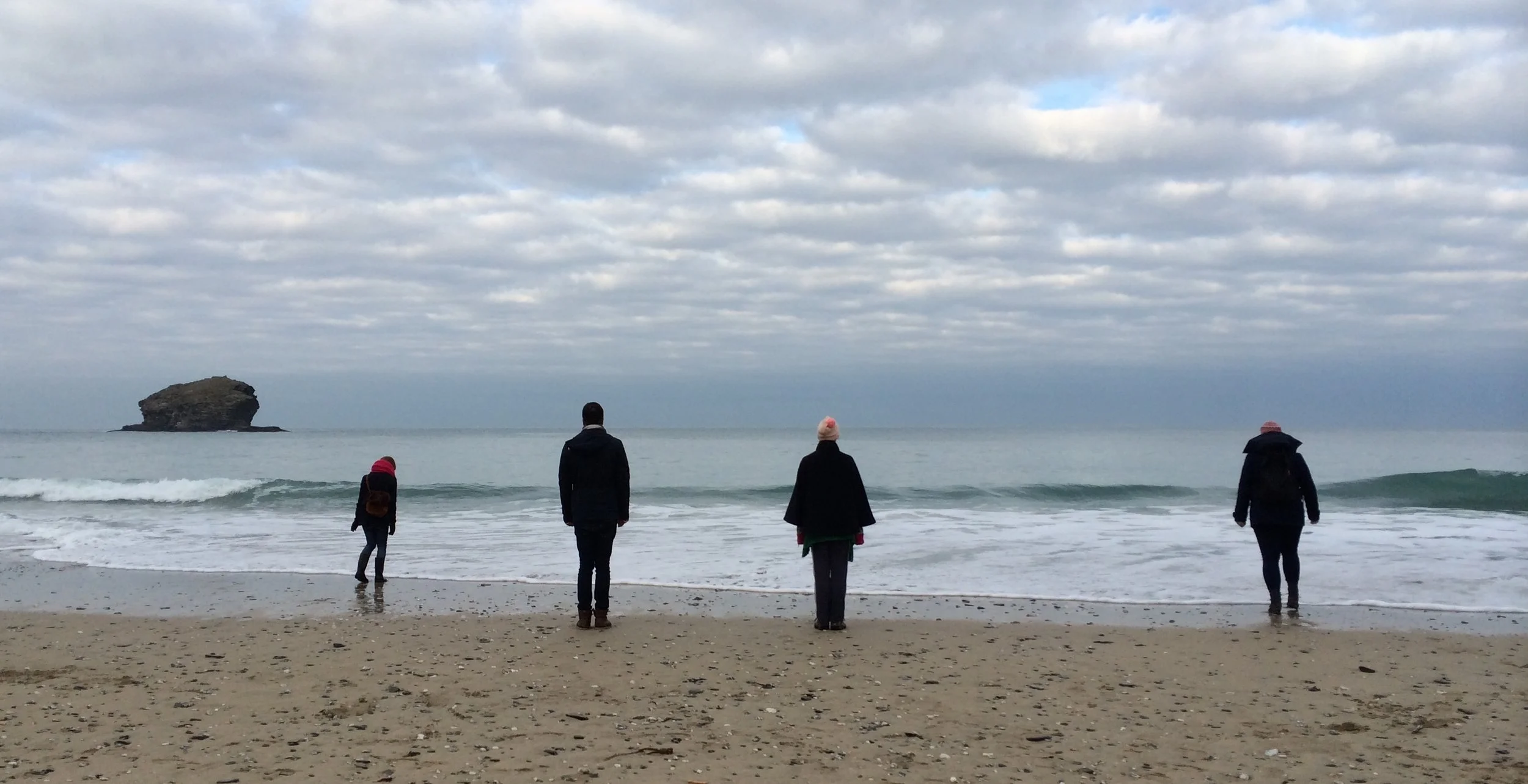
Being Here (Together): Towards the Sublime in Participatory Practices in Contemporary Art
Paper that discusses artists evoking the sublime in their work, including John Cage and Marina Abramovic, 2016
Research project, MFA studies, School of the Art Institute of Chicago
“Is it really possible to be present? It seems like the only way one could be completely present is to be unaware of the self.” - Gary Hill, artist
I see participatory performance as a strategy used by a number of artists, including myself, to afford those engaged the possibility of a sublime experience of the present moment. By sublime, I refer to the following definition: “an object or situation whose qualities exceed and escape our grasp.” The works I will discuss all use a simple set of instructions in an effort to create a transformational experience for participants and spectators who are often one and the same…
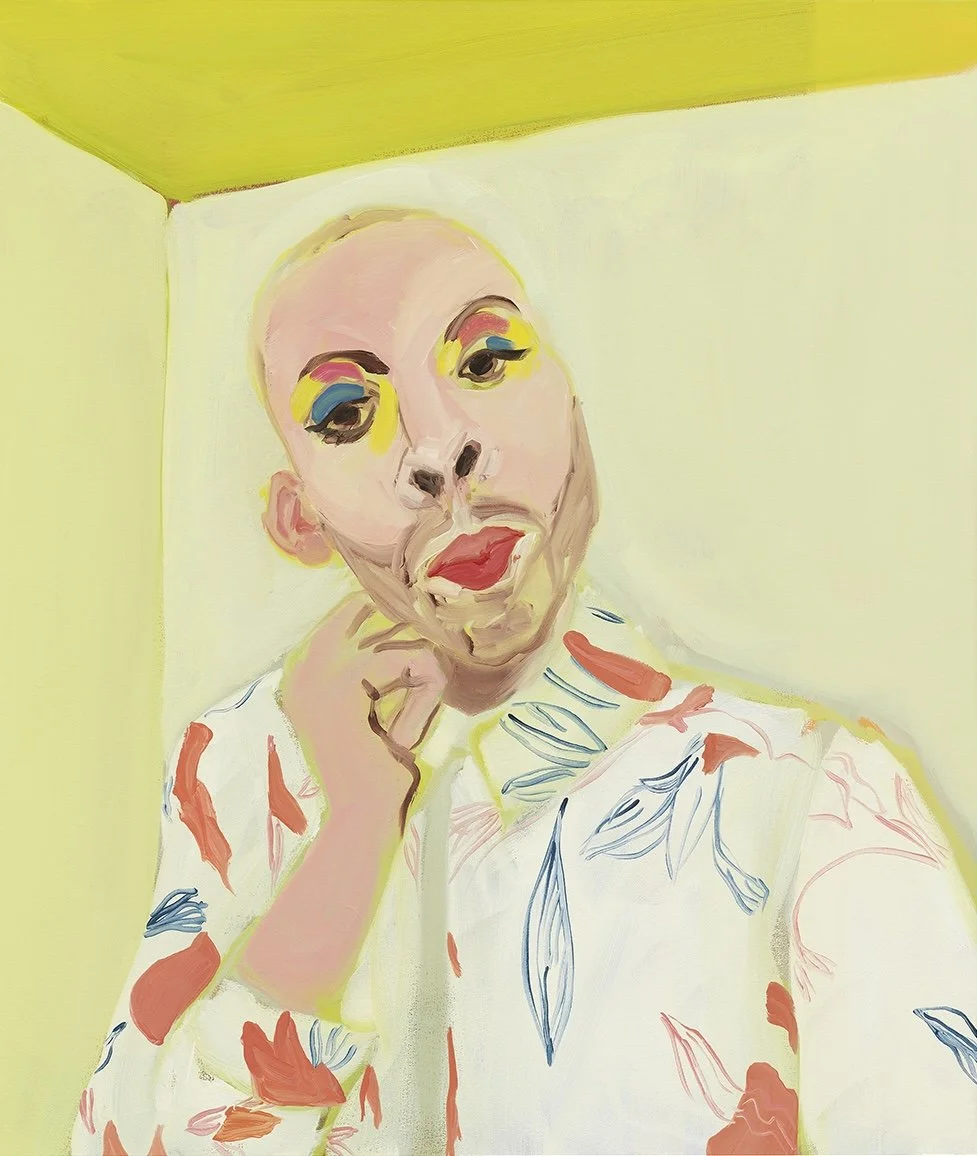
The New Brag: Erasure and Co-Constitution of Self
MFA Thesis, School of the Art Institute of Chicago, 2018
Available at the John M. Flaxman Library, School of the Art Institute of Chicago
Puddles of poured paint, a physical drawing line that swings with the weight of its lead core, my quiet presence in front of Joan Mitchell’s City Landscape, the map of the floor of the gallery carried out into the world, the drawings starting whole then broken and repaired and broken and repaired, the people living with the drawings in their kitchens and studios, and all of us gathered at the ocean, moving in unison with the water and feeling it in our bodies. These are some of the things I’ve made for you, World. I was trying to talk to you. I was trying to say “I love you” in so many different languages. These things were my intermediaries—these object, these engagements…
Read More
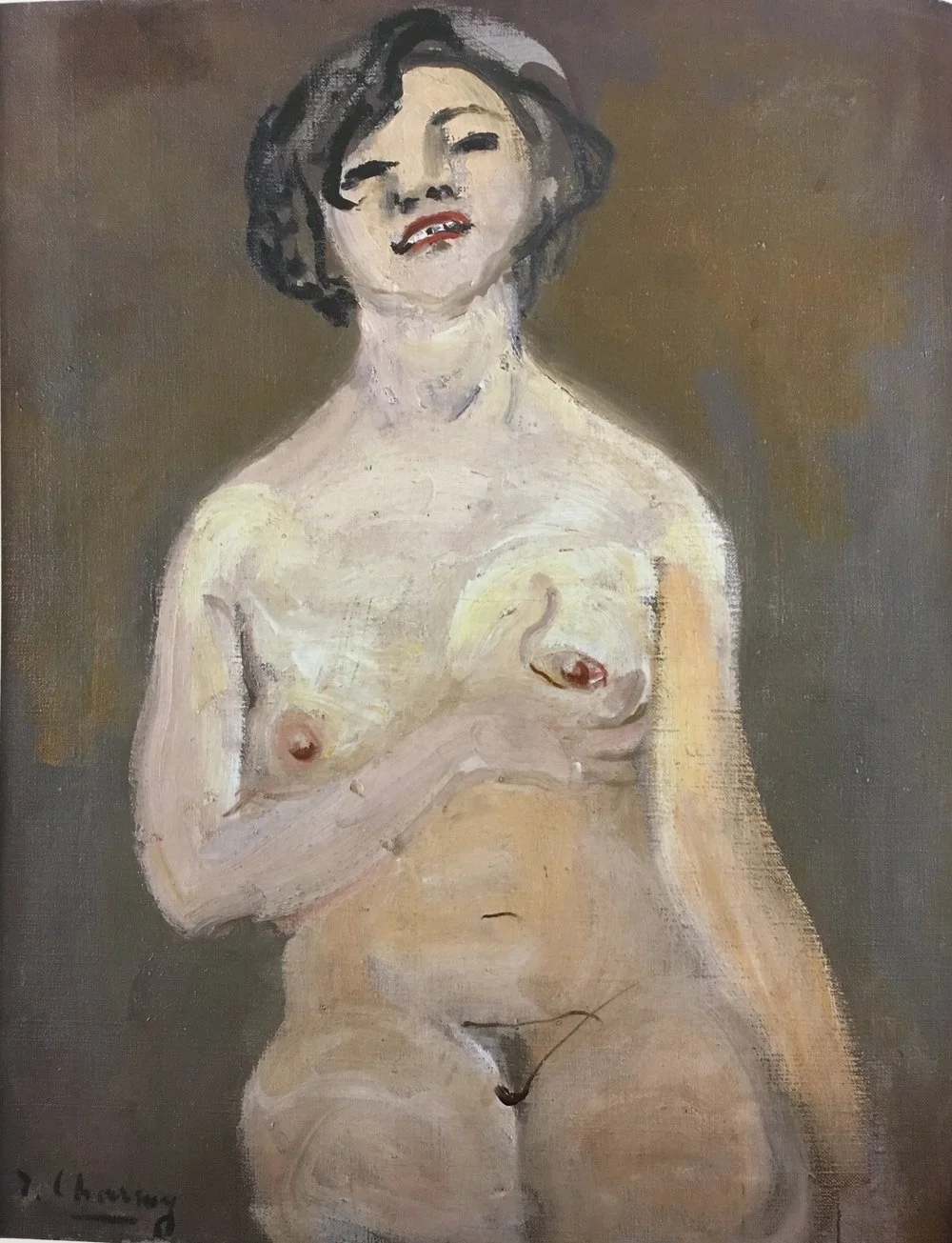
Emilie Charmy: She sees like a woman, paints like a man
Paper on French artist Emilie Charmy surveying the development of her work in the context of her time, 2017
Research project, MFA studies, School of the Art Institute of Chicago
In her 1989 work, Untitled (Your body is a battleground), Barbara Kruger articulated what has been true throughout time and continues to be true in 2017 as evidenced by the parade of sexual harassment, abuse, and assault cases2 that have been revealed on almost a daily basis in the United States: The female body is the site of degradation, oppression and violence.
Women have found many strategies to attempt to gain control of their bodies and claim self-definition. One such strategy for the female artist is self-portraiture. This paper will will focus on a work by French artist, Emilie Charmy, entitled Nude Holding Her Breast painted in 1925 as the culmination of a series of self-portraits that depict Charmy’s unfolding empowered self.

Poetry Collection written in relation to The New Brag project, Thesis Presentation, MFA, School of the Art Institute of Chicago, 2018
Untitled
If you don’t have arms,
I’ll be your arms
but will you be my hair?
My hair stopped growing years ago.
I need some to keep me warm
and you look like just the one.
Actually you look more like two
or three actually
or everybody who’s ever made you
and there are so many.
It’s quiet now
and I’m moved by your generosity…

Richard Tuttle: Drawing the Real
Research paper that discusses Tuttle work entitled 8th Paper Octagonal in relation to his practice and related works by other artists, MFA studies, School of the Art Institute of Chicago
Drawing is inside the person, not on the paper.
Richard Tuttle
Richard Tuttle is a master of playing with space, perception and expectations. The work that is the focus of this paper, 8th Paper Octagonal, 1970, is a good example. When one encounters it in the museum, the work provokes a sense of the beholder’s body located in the space and confuses vision as the viewer seeks to understand what they are looking at.